
HONJIN

Japan · Property viewing itineraries

Buying in Japan is the easy part. Seeing it is not.

There is no law stopping you. No visa, no residency, no local partner — a foreign buyer holds the same freehold title a Japanese buyer holds. What stops people is everything around the purchase: the listings that exist only in Japanese, the agents who will not return a foreign email, and a week in Tokyo that nobody has built around your family.

We build that week.

7.5%

of new-build apartments sold in central Tokyo's six inner wards in the first half of 2025 went to a buyer with an address outside Japan — up from 3.2% across 2024.

Cabinet Secretariat, March 2026, from Ministry of Justice registry data

None

Restrictions on foreign nationals buying freehold land and buildings in Japan. Ownership is full and permanent, and it does not depend on a visa.

Position as at August 2026 — see the note below

14

Emirates flights a week between Dubai and Tokyo Narita from May 2026, doubled from seven. Qatar Airways flies Doha–Narita twice daily.

Airline schedule announcements, 2026
The question you should be asking

Japanese agents show properties for free. So why would you pay us?

It is a fair question and we would rather answer it than hope you do not ask. In Japan the agent's fee is a success fee, capped by law and paid at completion. A viewing costs you nothing. If you live in Tokyo, speak Japanese and have three months to spend, you do not need us.

You are not in Tokyo. And the fee structure that makes viewings free is the same one that decides whose calls get returned: an agent earns nothing from the four days spent driving an overseas family around, and everything from the domestic buyer who signs on Saturday. Our partner joined this business after bringing overseas buyers to Japan and watching agencies turn them away — not out of rudeness, but because the economics of their week said no.

What you are paying for is not the viewing. It is a shortlist someone actually filtered, five days that were designed around your family rather than an agent's diary, and a person whose only interest is that you buy the right thing — or nothing at all.

The itinerary

Five days, prepared for months.

01

Before you fly

A shortlist, not a portal

You tell us the budget and the purpose — yield, a family base, a place to keep. We work the Japanese-language listings, the off-market stock our partner agents hold back, and the buildings that never reach an English site. You receive six to ten properties with the numbers already checked: ground rent, management fee, sinking fund, the building's repair history, the honest rental comparables. Anything that fails is removed before you see it.

02

Days one to five

Eight to twelve viewings, one car, one interpreter

A licensed agent attends every viewing — that is a legal requirement in Japan, and it is your protection. We drive, we interpret, we ask the questions a Japanese buyer would ask and a foreign buyer does not know to. Between viewings you meet the people you would actually need: a bilingual judicial scrivener, a tax accountant who files for non-residents, a building surveyor.

03

If you decide to buy

We hand you over, in writing

The purchase itself is done by a licensed Japanese agency — we introduce you and we stay in the room. You will need a signature affidavit in place of the Japanese seal, a tax representative for the annual property tax, and a Foreign Exchange Act report. We prepare that list for your specific purchase before you commit to anything.

04

After the keys

Somebody has to answer the letters

Japanese property generates Japanese paperwork forever: management association notices, tax bills, tenant matters. We arrange the tax representative and the management company, and translate what actually needs your decision.

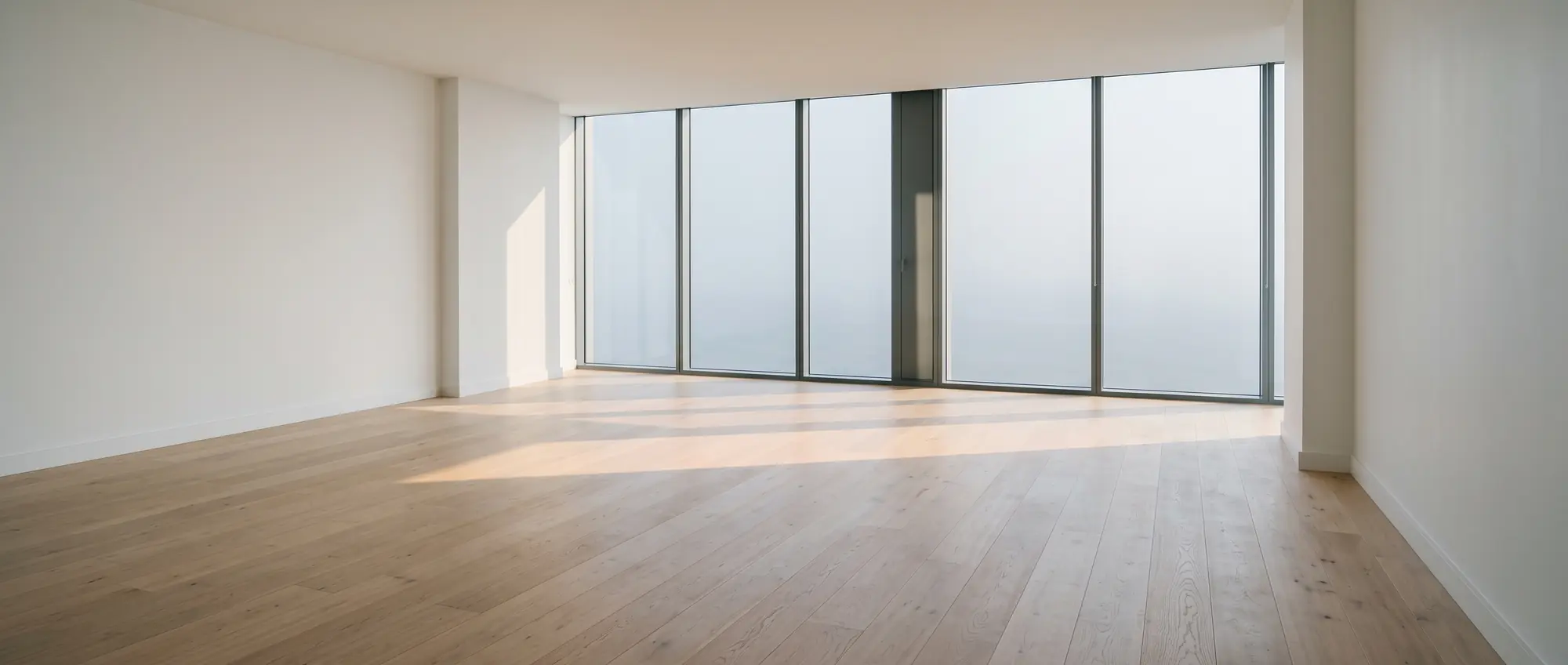
An empty apartment on a high floor, afternoon light across bare boards.

Planned in, not accommodated

A viewing day that stops for Maghrib.

Most Japanese itineraries treat prayer and halal food as a request to be handled if it comes up. We treat them as fixed points and build the driving around them, because a day that ignores them is not a luxury day.

  • Prayer times set the schedule

    Viewings and drives are timed against the day's prayer times for the city you are in, not squeezed around them. A mat and a qibla direction travel in the car, and the stops are chosen with that in mind.

  • Halal dining, certified by a body you recognise

    Japan has no single halal authority — six certifiers operate side by side. We work with the one accredited by GAC and MOIAT, because that is the accreditation that means something at home. You get the restaurants and their certifier before you fly, not a promise that something will be arranged.

  • Ramadan itineraries run differently

    Until the end of the decade Ramadan falls in the Japanese winter, when a fast in Tokyo runs about eleven hours rather than the twelve to fourteen you are used to. Shorter viewing days, later starts, iftar arranged. Say so on the form and the whole plan changes shape.

  • Family-sized, not couple-sized

    Japanese hotels are built around rooms for two. Moving twelve or eighteen people together takes whole-house rentals, connected suites and villas — a different inventory, booked further ahead.

  • Women in the party

    Female interpreters and female staff where you want them, arranged at booking rather than requested at reception.

What is changing, stated plainly

Japan is starting to record who is buying.

You will find websites telling you to buy now before the door closes. That is not what is happening, and we would rather you heard it accurately from us.

As at August 2026 there is no law restricting who may buy property in Japan. What has changed is record-keeping. Nationality became a required field on large land-transfer filings in July 2025. From April 2026 every property acquisition by a non-resident is reportable under the Foreign Exchange Act, not only investment purchases. Nationality will be recorded at land registration during the 2026 fiscal year.

Separately, the Cabinet has asked officials to draft the skeleton of a new framework for foreign land acquisition by the summer of 2026 — that work is under way now, and it is aimed at land near defence installations, border islands and forests, not at apartments in Minato-ku.

The practical effect for you is more paperwork, not a closed door. That paperwork is part of what we handle. Anyone who tells you Japan is about to ban foreign buyers is selling you urgency they cannot support.

Sources: Cabinet Secretariat, “Systems and operational status relating to land in Japan”, 4 March 2026; Comprehensive Response Policy adopted by the Ministerial Council, 23 January 2026. We are not tax or legal advisers and this is not advice on your purchase.

Who this is for

  • Buyers with ¥50 million and upward, able to complete in cash. Japanese banks rarely lend to non-residents.
  • Families who intend to use the place, or to hold it for a generation.
  • People who would rather see eight buildings properly than forty on a screen.
  • Anyone who needs prayer, halal food and family-sized rooms treated as requirements.

Who this is not for

  • Anyone here for the abandoned houses selling for the price of a watch. Those are real, and they are a different business with different people — we are not it.
  • Buyers hoping property brings a visa. It does not, in any amount. Ownership and immigration are unconnected in Japan.
  • Anyone wanting to flip inside a year. Japan's developers have begun capping how many units one buyer may register, and the government is watching short-term resale.
  • Anyone who wants a free tour of Tokyo. Introductions are made, and they are paid for.
Folded indigo-dyed cotton.

The fee

Quoted before you book, once we know the party.

A five-day viewing programme for a family of four to six begins at ¥2,000,000 — around US$13,000 — covering the search, the shortlist, the vehicle, the interpreter, the professionals you meet and the paperwork map for your purchase. It excludes flights and hotels, which we book on your behalf at our rates.

Larger parties, several cities, or a purchase you want run to completion are quoted individually. We will tell you the number in writing before anything is booked, and we would rather decline than take a fee we cannot earn.

One thing worth being plain about. This fee buys the travel: the search, the days, the car, the interpreter, the introductions. It is fixed before you fly and it does not move if you buy, and it does not move if you do not. We take no commission on any purchase and no share of any agent's fee. If a property suits you, the sale is handled by a licensed Japanese agency who contracts with you directly and is paid by you or the developer in the ordinary way.

Enquire

Tell us the budget and the purpose.

Everything else follows from those two answers. A named person replies within two business days with what is possible for a party of your size, in the season you named, and what it would cost. If we are not the right people, we will say so and point you somewhere better.

We correspond in English and French. Enquiries are read only in our office.

We ask this first because it decides whether we are the right people for you. Nothing is shown to anyone outside our office.

What are you looking for?
Observance

Tick anything that must be planned in rather than asked for on the day. We build the itinerary around these, not the reverse.

A reply from a named person within two business days. No mailing list, no brochure.