HONJIN

Japan · Commissioned journeys

You have already stayed at the good hotel.

For a family that has been to Japan once, the second visit is the difficult one. The suite is the same suite. Kyoto is the same Kyoto, with more people in it. The itineraries sold in London and New York are competent and identical, and they were written by someone who does not live here.

We are in Japan, and we do not sell an itinerary. We take a commission and go and arrange it.

One

party at a time. We are not a tour operator with departures. Everything here is arranged for a single family and does not run again.

2%

of visitors to Japan spend over ¥1,000,000 each on the ground — and they account for roughly 19% of everything foreign visitors spend in the country.

Japan Tourism Agency, 2023 figures

0 of 8

Of the eight firms ranking highest for luxury Japan travel, none is a Japanese company — they are British, American and Canadian. None of the eight mentions halal dining anywhere on its site.

Site-by-site check, August 2026

The premise

Nobody comes back for the hotel.

The people we work with can book any room in Japan from their phone. What they cannot book is a morning at a forge, an afternoon with a nursery master, or a counter that takes no bookings. Those come through a person, over time, in Japanese.

So we do not begin with a route. We begin with a question — what would make this trip worth taking — and then spend some weeks finding out whether it can be arranged. Sometimes it cannot, and we say so early.

We checked the eight firms that rank highest in English for luxury Japan travel in August 2026. Not one is a Japanese company. Not one mentions halal dining anywhere on its site. Only one asks your budget before quoting, and that question stops at “over £10,000”.

This is a slow way to sell travel and it does not scale. That is the point. One family at a time is the product, not a limitation of it.

Four things we know how to arrange

Specific, and therefore checkable.

We would rather name four things precisely than promise everything vaguely.

Steel

Forging alongside a licensed master

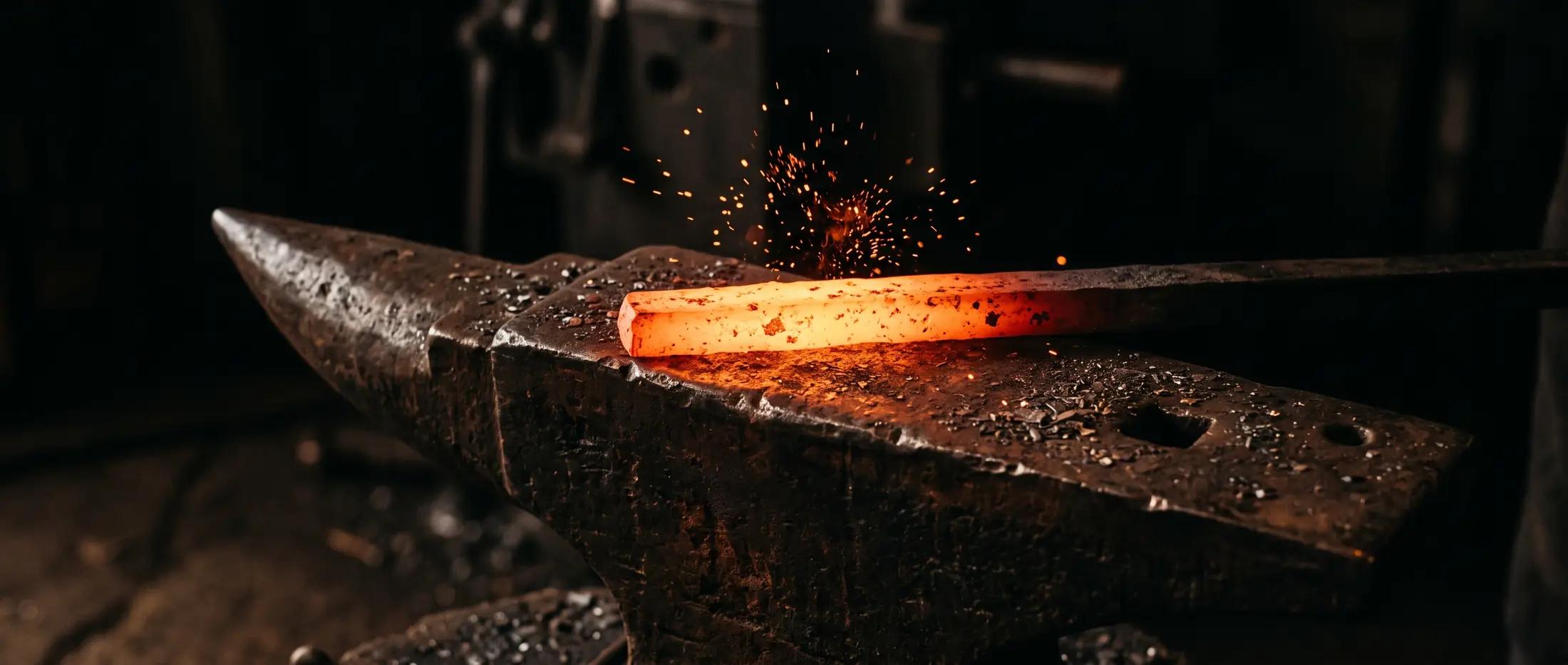
Making a Japanese blade is a licensed act. Under the Firearms and Swords Control Act a smith must be approved for each individual blade, so the legal maker is always the master, and the blade carries his signature. What can be yours is the work and the name beside his. You stand at the forge for the folding and the quench; the blade is finished, polished and registered over the following year.

Kagoshima. Day programmes run from ¥220,000 to ¥658,000 a person. A commissioned blade by a named master starts around ¥7,000,000 and takes a year to eighteen months. On taking it home: the UAE licenses weapon possession to nationals only, and Saudi and Qatari customs list weapons as prohibited, with no exemption for art or antiques in any published rule we could find. So we do not promise delivery. We will write to your ministry and your airline on your behalf before any steel is cut, and if the answer is no, the blade stays in Japan under our care and you visit it. We would rather say that now than after a year of a master's work.

Living things

Bonsai, studied rather than photographed

A week in a working nursery near Matsuyama, with a teacher who has trained foreign apprentices and knows how to explain a two-hundred-year-old tree to someone seeing one properly for the first time. You will not leave with a tree — phytosanitary rules make that a separate, slow project — but you may leave having commissioned one.

Matsuyama. Quoted by the week.

Medicine

Osaka, discreetly

Regenerative treatment and dentistry, at clinics that already receive overseas patients and are used to the questions. Scheduling, interpretation, medical-stay visa sponsorship where it applies, and a family programme running alongside for everyone who is not the patient.

Osaka. Clinics matched to the case after a written enquiry, not before.

The quiet ones

Whatever it actually is

Dogs, for the families who came because of a Shiba. A tea master who does not take bookings. The inside of a sumo stable at morning practice. A kaiseki counter that seats eight and has no telephone. These are not menu items; they are relationships, and they take a few weeks to arrange.

Ask on the enquiry form. If we cannot arrange it we will say so.

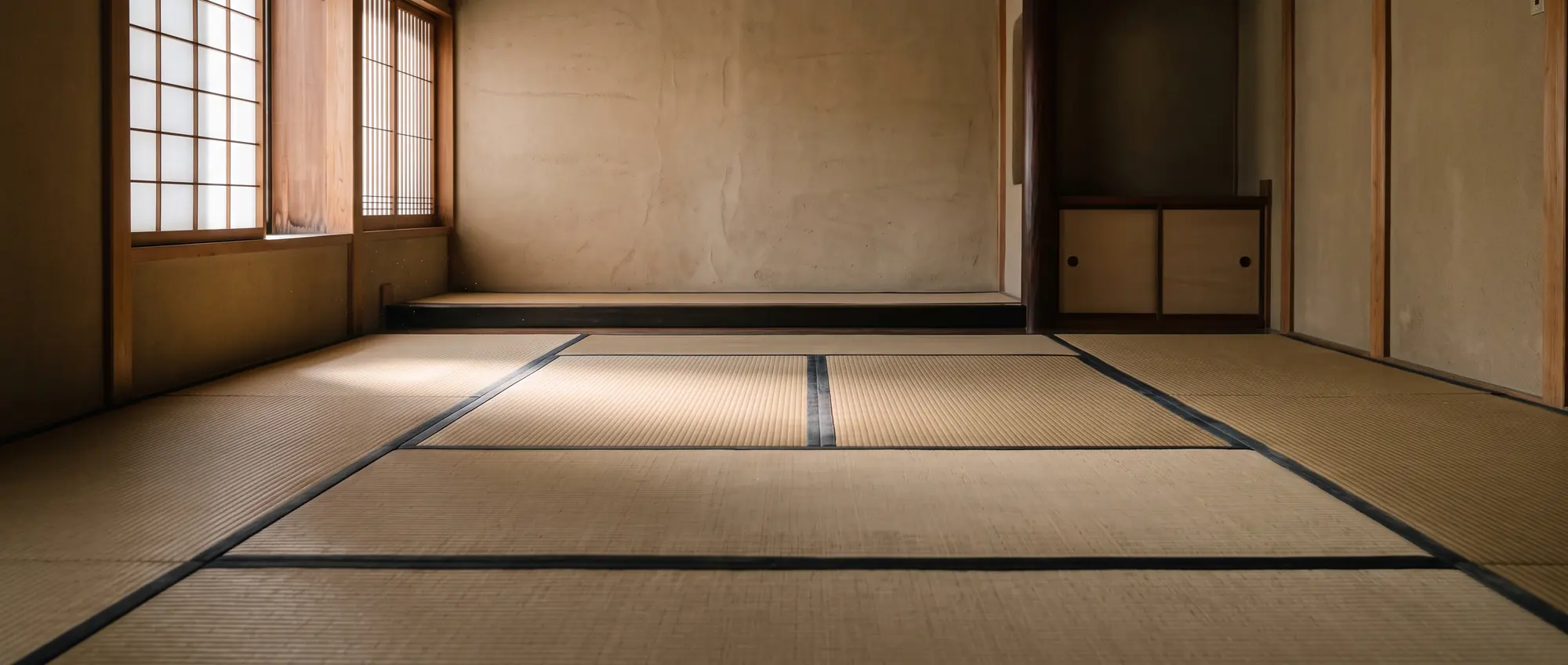
An empty tatami room, morning light through a shoji screen.

Planned in, not accommodated

The day is built around the prayer times, not the other way round.

Ask a luxury operator about halal dining and you will usually get a willing answer and a vague one. We build the schedule from these five points outward, because for the families we work with they are not preferences.

  • Five prayers, in the schedule

    Movements are timed against the day's prayer times in each city. Mat and qibla travel with the car; where the house has no suitable room, one is set aside.

  • Halal dining you can verify

    Japan has no single halal authority — six certifiers operate side by side, and most of them are accredited for South-East Asia rather than the Gulf. We work with the body accredited by GAC and MOIAT. Restaurants are named before you fly, with their certifier. Kaiseki is the hard case: mirin, cooking sake and brewed soy are in nearly every sauce, so the menu is rebuilt rather than adjusted.

  • Friday prayers

    Jumu'ah is a fixed point. Where the itinerary is far from a mosque, the day is built shorter or moved.

  • Ramadan, which is the case for coming

    Ramadan falls in the Japanese winter until the end of the decade. A fast in Tokyo in February runs about eleven hours, against twelve to fourteen at home, and it lands squarely in the Niseko season. Suhoor before five, iftar after half past four; we agree those hours with the kitchen months ahead, because no ryokan serves dinner at that time by default.

  • Eighteen people, one roof

    Japanese hospitality is built for two. We checked: the country's flagship private-villa brand tops out at four bedrooms, and the largest suite at Niseko's best-known lodge sleeps eight. Keeping a family of fifteen together means taking a small ryokan whole. It is arrangeable, it is expensive, and it has to start months out. Tell us the number first, not last.

Folded indigo-dyed cotton.

The fee, and how it compares

Priced like a commission, because that is what it is.

A tailored Japan itinerary from a good London or New York house runs roughly US$15,000 to US$30,000 a person for eleven to seventeen days, before flights. That is the market, and it is a fair market.

We charge an arrangement fee of ¥3,000,000 upward — around US$20,000 — for the party, not per person, plus the cost of what is booked. For that fee we spend the weeks before your trip finding the people, and we are with you while you are here.

Where a commission involves a made object — a blade, a tree, a piece of work by a named master — the object is priced separately and honestly, and most of the cost is the maker's time rather than ours.

Travel is arranged through a registered Japanese travel operator. Every figure here is a starting point; you receive a written quotation before anything is reserved.

Begin

Tell us what would make the trip worth taking.

Not the cities. The thing. A named person replies within two business days, from Tokyo, saying whether it can be arranged, roughly when, and roughly for how much. If it cannot, you will hear that instead.

We correspond in English and French. Enquiries are read only in our office.

We ask this first because it decides whether we are the right people for you. Nothing is shown to anyone outside our office.

What interests you?
Observance

Tick anything that must be planned in rather than asked for on the day. We build the itinerary around these, not the reverse.

A reply from a named person within two business days. No mailing list, no brochure.